
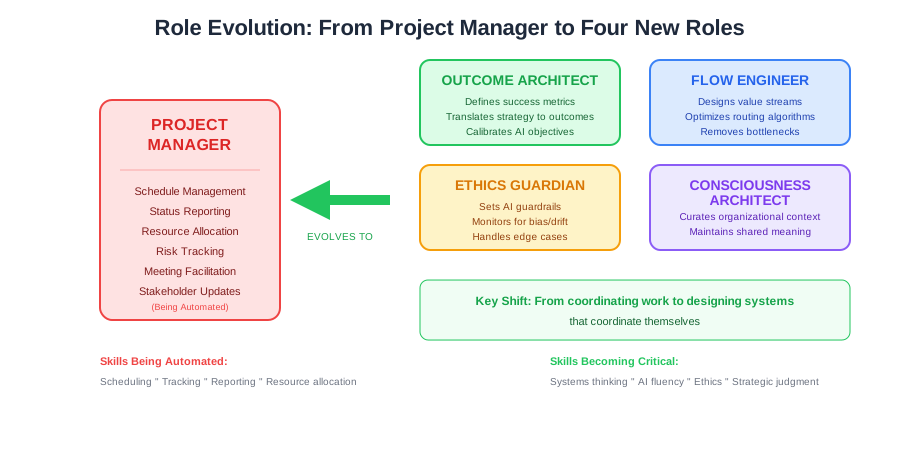
Project management as a profession is transforming. The administrative work is being automated. What remains is more strategic—if you're ready for it.
When AI handles coordination, humans can focus on what machines cannot do: interpret meaning, navigate ambiguity, make ethical judgments, and design systems that reflect our values.
The post-project world offers four distinct career paths. Understanding them helps you choose your direction and plan your transition.
Outcome Architect
What you do
Define what autonomous systems should optimize. Translate business strategy into measurable outcomes. Ensure systems pursue the right objectives.
Day-to-day activities
- Meeting with business stakeholders to understand strategic priorities
- Defining outcome metrics and success criteria
- Reviewing system behavior to ensure alignment with intended outcomes
- Adjusting outcome definitions as circumstances change
- Communicating the "why" behind organizational priorities
Skills required
- Strategic thinking and business understanding
- Translation of abstract goals into concrete metrics
- Judgment about when objectives need to change
- Strong stakeholder relationships
Career trajectory
Outcome Architects often move into executive strategy roles. Their ability to connect organizational activity to business value positions them for senior leadership.
Compensation expectation
High. Outcome definition is strategic work. Organizations will pay premium rates for people who can ensure they're optimizing for the right things.
Best fit for
Project managers who were always more interested in "why" than "how." Those with business backgrounds, MBA training, or experience in strategy consulting.
Flow Engineer
What you do
Design and optimize value streams—the paths through which work moves from inception to delivery. Focus on efficiency, throughput, and the elimination of friction.
Day-to-day activities
- Mapping value streams and identifying inefficiencies
- Designing routing mechanisms and handoff protocols
- Detecting and eliminating bottlenecks
- Tuning optimization parameters
- Analyzing flow metrics and identifying improvement opportunities
Skills required
- Systems thinking and process analysis
- Technical understanding of coordination infrastructure
- Data analysis and pattern recognition
- Continuous improvement methodology
Career trajectory
Flow Engineers often move into operational excellence or technology leadership roles. Their systems perspective positions them to oversee complex technical operations.
Compensation expectation
Strong. Flow optimization creates measurable value that organizations will pay for. Technical skills command market premiums.
Best fit for
Project managers with technical backgrounds or strong analytical skills. Those who love systems thinking and process optimization. Lean and Six Sigma practitioners.
Ethics Guardian
What you do
Ensure autonomous systems operate within appropriate ethical boundaries. Translate organizational values into system constraints. Monitor for ethical drift.
Day-to-day activities
- Developing ethical frameworks for autonomous decisions
- Reviewing system decisions for value alignment
- Investigating boundary violations or concerning patterns
- Updating ethical guidelines as circumstances change
- Training others on ethical considerations
Skills required
- Ethical reasoning and values articulation
- Translation of principles into operational guidance
- Pattern recognition for drift and bias
- Willingness to challenge decisions on principle
Career trajectory
Ethics Guardians often move into compliance, risk, or governance leadership. As AI governance becomes mandatory, these roles will grow in prominence.
Compensation expectation
Growing. Regulatory requirements for AI ethics are increasing. Organizations will need qualified ethics professionals. First movers will command premiums.
Best fit for
Project managers who care deeply about "doing the right thing." Those with backgrounds in compliance, legal, or risk management. Philosophy or ethics training is valuable.
Consciousness Architect
What you do
Design how organizations think—the patterns, principles, and priorities that guide organizational behavior. This is executive-level work.
Day-to-day activities
- Defining organizational cognitive patterns
- Embedding patterns in autonomous systems
- Ensuring consistency across organizational functions
- Recognizing when patterns need evolution
- Leading organization-wide transformation
Skills required
- Meta-cognition and pattern thinking
- Organizational psychology and culture
- System architecture and design
- Executive presence and influence
Career trajectory
Consciousness Architects are executive-level professionals. They typically have COO, Chief Transformation Officer, or similar titles.
Compensation expectation
Very high. This is C-suite work with C-suite compensation.
Best fit for
Senior project professionals with broad organizational perspective. Those who aspire to executive leadership and are willing to invest in significant capability development.
Planning Your Transition
Transitioning from traditional project management to one of these roles typically takes 18-36 months. The path involves:
📊 DIAGRAM 13: SKILLS TRANSITION JOURNEY
Three horizons of professional development from current skills to future mastery
Year 1: Foundation
- AI fluency development
- Strategic thinking skills
- Outcome definition practice
- Stakeholder relationship building
Year 2: Application
- Lead pilot initiatives
- AI-system integration
- Organizational influence
- Become trusted advisor
Year 3: Transition
- Formalize new role
- Scale your impact
- Develop others
- Lead transformation
Which Path Is Right for You?
Consider these questions:
Do you love the "why" more than the "how"?
Consider the Outcome Architect path. You'll spend your time understanding strategy and translating it into measurable objectives.
Do you love systems thinking and optimization?
Consider the Flow Engineer path. You'll design and tune the systems that enable continuous value delivery.
Do you care deeply about doing the right thing?
Consider the Ethics Guardian path. You'll ensure autonomous systems operate within appropriate boundaries.
Do you aspire to executive leadership?
Consider the Consciousness Architect path. You'll design how entire organizations think and operate.
Ready to Start Your Transition?
The future of project management is strategic, not administrative. Choose your path and start building the skills you'll need.
OrbaOS Sovereign State — governance simulation, alongside this framework.
Visit →